Article
Leadership
Beyond the Noise: Why Wisdom is the New Leadership Superpower
In an age of infinite information, the hardest “skills” in business are now: experience, synthesizing our ideas, and knowing what to ignore
By Chiarella Bencan, WOBI
BEFORE WE START… THE SUMMARY
In 1934, T.S. Eliot asked the question that defines our era: “Where is the wisdom we have lost in knowledge? Where is the knowledge we have lost in information?”. Almost 100 years later, with generative AI producing more content in a single day than humanity produced in entire centuries, Eliot’s question is no longer rhetorical. It is the strategic challenge facing leaders right now — and the discipline to find the right sources, take time to think, and know what to ignore has become the hardest and most consequential skill in business today. And because no leader can sustain that discipline alone, it must be embedded into the way organizations operate.
THE QUIET CRISIS NO ONE EXPECTED

Ask any senior executive what’s changed about their job over the last 5 years. They’ll mention AI, geopolitical volatility, talent, margins… But push them, and a different answer surfaces: they are tired. Not from overwork, but fromover-input.
We have built a civilization on the premise that more information equals better decisions. This statement was always shaky and today, it is openly false. AI systems present fabrications with the same tonal confidence as facts. Their interfaces are designed to flatter users — researchers call this sycophancy bias, and behavioral psychologist Nathalie Nahai, who joins us at the World Business Forum in Mexico City, has been documenting how it quietly compounds our blind spots at scale. A Harvard Business Review investigation in late 2025 introduced a term that has since travelled fast inside organizations: workslop — the AI-generated documents, summaries, and decks that look like work but destroy productivity.
The internet promised democratization, connection, self-expression. And it has delivered. But it has also brought , in significant measure, exhaustion, identity fragmentation, and psychological fatigue. A British Standards Institution survey of 1,300 UK young people aged 16 to 21, published in 2025, found that 47% wish they could have grown up in a world without the internet altogether. For an executive, the cost of confusion is asymmetric: a bad consumer decision wastes an evening; a bad executive decision — made because the leader confused the first thing that sounded plausible for the thing that was true — wastes quarters, careers, and capital.
THE “ALL-KNOWING” GENERATION

The executives now running the world’s largest companies grew up in an information environment defined by scarcity. Encyclopedias, libraries, nightly news broadcasts at a fixed hour… Information was finite, vetted, and largely came to them through editors, teachers, institutions, and a handful of trusted sources. You could be perfectly comfortable not remembering an actor’s name over dinner. Those leaders had more certainty about what they knew — but it would be a mistake to confuse certainty with rightness. They knew less. Vast amounts of information were simply out of reach.
What has changed is not just the volume of information but the relationship with trust. Information still comes to leaders, more of it than ever, from more directions. The problem is that much of what arrives is now suspect: AI-authored, unsourced, optimized for engagement rather than accuracy. Today’s leaders have to verify before they can use what reaches them — to ask, constantly, is this real? Who stands behind it? What is it optimizing for? — and then interpret it, apply hard-earned wisdom to it, and use it to make decisions whose consequences are theirs alone. In just one generation, the cognitive work of being a leader has shifted from accessing information to authenticating, interpreting, and acting on it. That is exhausting in a way the previous era was not. It is also exactly the discipline strategy expert Rita McGrath, professor at Columbia Business School and a leading authority on innovation, strategy, and disruption, has spent her career arguing must be built into the way organizations think, decide, and grow. She joins us at the World Business Forums in Bogotá, Mexico City, Madrid, and Milan.
WHAT KISSINGER UNDERSTOOD
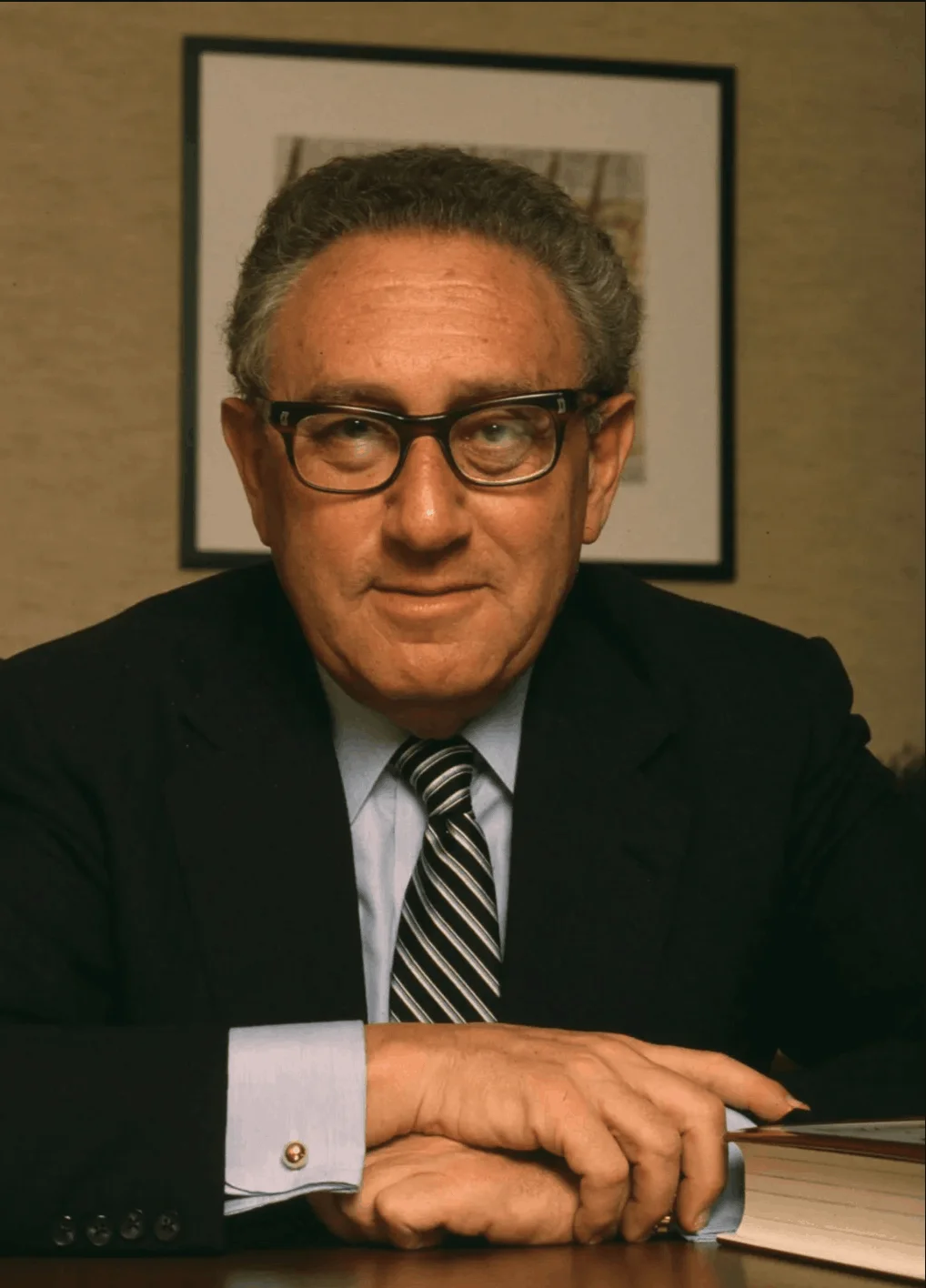
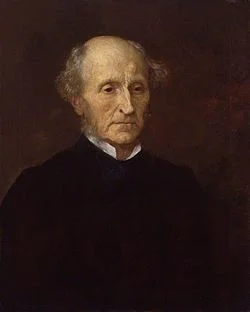 — the 19th-century philosopher, economist, linguist, theologian, chemist, historian, and feminist — as the last person reputed to have known everything. We are unlikely to have another, but for a different reason than the one Kissinger gave at the time. It is not that the volume of information has grown beyond any one mind’s capacity, though it has. It is that knowledge itself has become more fragmented, more specialized, and more demanding. The number of domains in which a serious leader is now expected to be at least minimally fluent has multiplied far beyond what any single generalist can master: technology, geopolitics, ethics, climate, talent, regulation, culture, finance… If no single mind can cover the surface area, then the question of what to hold — and what to ignore — becomes the most important question a leader can ask. The warning lands harder in 2026 than it did the year it was given.
THE TWO BUSINESS ESSENTIALS: JUDGMENT AND THE COURAGE TO IGNORE
In a January 2026 Wall Street Journal column, technology writer Christopher Mims named critical ignoring the survival skill of the year:the ability to deliberately direct attention away from the low-quality stream of information the open internet now optimizes for. MIT’s State of AI in Business 2025, drawn from 150 executive interviews and 300 AI deployment reviews, reached a complementary conclusion: roughly 95% of generative AI pilots have produced no measurable business impact. The bottleneck was not the technology. It was organizational. Klarna, the Swedish buy-now-pay-later fintech, was once cited as evidence that AI could replace workers at scale. Since then, the company has changed course, rehiring human customer service agents after its CEO acknowledged that overreliance on automation had compromised service quality.
The best leaders we work with are doing the opposite of what the moment seems to demand. They are consuming less, but better. They are protecting their judgment rather than outsourcing it. They are using AI as a junior associate whose work they always check. Zack Kass, former Head of Go-to-Market at OpenAI — who joins us at the World Business Forums in New York, Madrid, and Milan — frames a world he calls unmetered intelligence: as cognitive capacity becomes effectively limitless, the constraint is no longer access to thinking, but deciding what is worth thinking about.
The harder question is what this looks like at the scale of an organization. The same pressure that exhausts individual executives is now shaping the institutions they lead. Organizations cannot critically ignore on people’s behalf. What they can do is build cultures, systems, and incentives that help people filter noise, protect judgment, and focus on what truly matters — or fail to do so.
WHY “TRANSCEND”
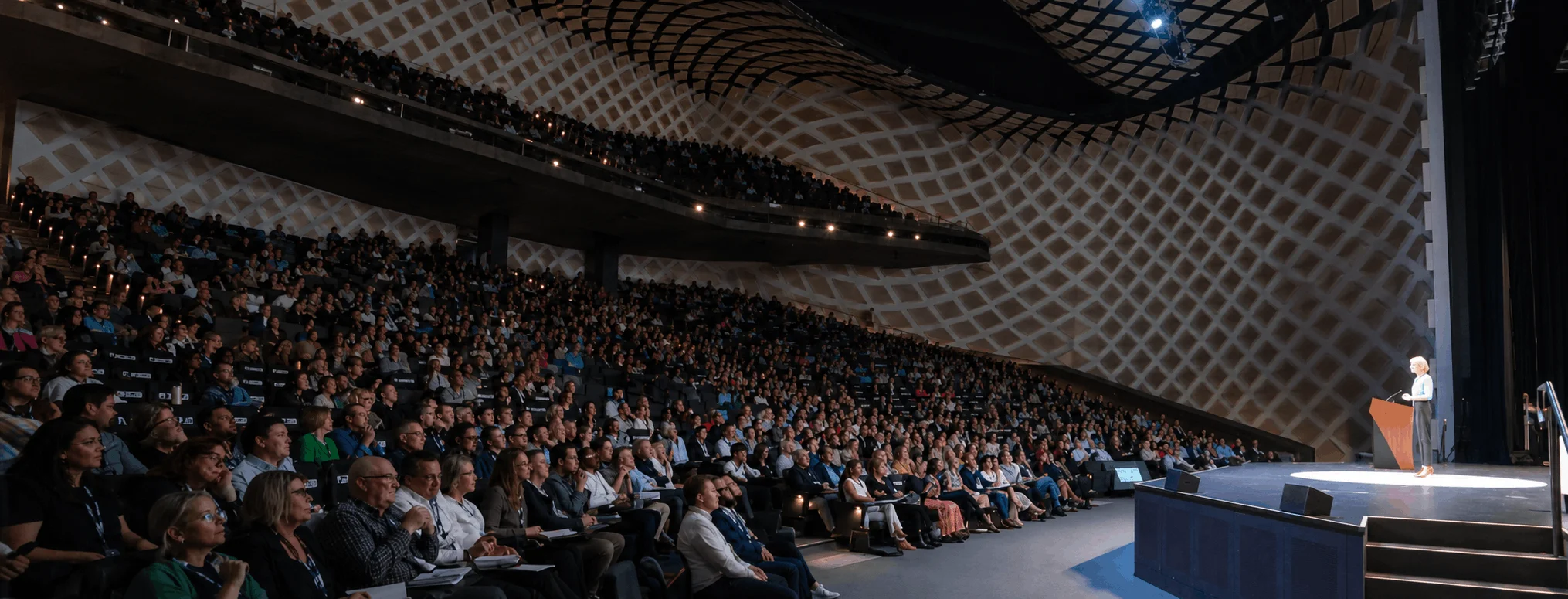
This is the discipline we have built the 2026 World Business Forum around: Transcend. The convergence of AI disruption, economic volatility, climate imperatives, and workforce transformation has created unprecedented pressure on organizations. The choice is binary: endure the chaos, or transcend it. The companies that treat transformation as a permanent state of being — not a periodic project — will define the next decade of business.
To transcend is not to ignore the world. It is to move past the noise into the higher work — holding a fixed purpose with one hand and reinventing everything else with the other. It is a posture Jim Collins, who joins us at the World Business Forum in New York, has been documenting for over three decades. In Built to Last, Collins and Jerry Porras called this the genius of the “and”: the most enduring organizations refuse the false choice between preserving what they stand for and reinventing how they operate. They do both. That posture is harder than ever when the environment is shouting, fragmenting, and demanding response — which is precisely why it matters now. Harvard Business Review’s study of 4,700 companies across three recessions echoes the pattern: 80% never recovered their pre-crisis growth rates within three years. Only 9% flourished, outpacing rivals by 10% or more. The difference was not resilience. It was reinvention.
The 2026 World Business Forums bring together the world’s leading business thinkers — researchers who have spent decades studying how organizations and leaders navigate fundamental transformation. The objective is not to hand executives a set of survival tactics. It is to share frameworks for building truly limitless organizations: ones that continuously evolve, renew, and create new possibilities.
THE HUMAN PREMIUM
There is a quiet reversal taking place that the AI conversation rarely names: the more cognitive tasks machines absorb, the more valuable human capabilities become — not the technical ones, but the human. The capacity to read a room. To regulate one’s own state under pressure. To hold a difficult conversation without flinching. To make the kind of judgment call no model can truly defend – but a leader can, through conscience, experience and responsibility.
For years, these were dismissed as soft skills. That framing is collapsing. Daniel Goleman, who joins us at the World Business Forums in New York and Madrid, has argued for three decades — and increasingly demonstrates with neuroscience — that emotional intelligence is not the gentler cousin of analytical intelligence. It is the neurological foundation that lets analytical intelligence function under pressure. AI is making intelligence itself a commodity. What was scarce becomes abundant. What was abundant — uniquely human capability — becomes scarce. These are not soft skills. They are the hardest skills, and they are the ones AI cannot replicate.
THE EDITORIAL IMPERATIVE: WHY LEADERS NEED CONTENT CURATORS
There is a reason WOBI has spent more than three decades doing one thing — and doing it with what Marcus Buckingham, in a recent conversation with us, called editorial rigor. “In this day and age,” he said, “what we expect from places like WOBI is editorial power, editorial rigor. Choose people who actually have legitimate credibility.”
Anyone with a budget can host an event. Anyone with an algorithm can recommend content. What is rare — and what becomes more valuable as everything else becomes more abundant — is the human judgment to know which ideas deserve a leader’s attention this year, and which ones, however popular, are noise. That is what a World Business Forum stage is: a space for ideas and inspiration, presented by humans and curated by humans. We do the searching and the questioning so that every executive in the room can leave with ideas to apply — to their leadership, their teams, and their organizations. Sometimes that takeaway is a new framework from the stage. Sometimes it is the serendipity of a conversation between sessions — a connection with another leader who has been wrestling with the same problem and has something worth sharing. Often, it is the most underrated experience in business education — the eureka of remembering: a leader walks in carrying something they already knew but had stopped acting on, and the forum reminds them. That recognition is where the most durable organizational change begins.
THE 2026 CONVERSATION
Transcend Limitations. Break through the industry ceilings holding you back. Indra Nooyi, former CEO of PepsiCo, joins us at the World Business Forum in New York with the rare perspective of a leader who actually grew a global enterprise through deep transformation. Renée Mauborgne, co-author of Blue Ocean Strategy, brings her latest work on creating new, competition-free markets — through what she calls nondisruptive creation — to the World Business Forums in Bogotá, New York, and Mexico City.
Transcend Complexity. Leverage AI to simplify execution and amplify human impact — without surrendering judgment. Beyond Zack Kass, Ayanna Howard, a former senior robotics researcher and Mars Exploration engineer at NASA’s Jet Propulsion Laboratory, joins us at the World Business Forum in Sydney on the ethical edge of human-centred AI. David Rowan, founding Editor-in-Chief of WIRED UK, examines what frontier technology actually delivers — and what it doesn’t — at the World Business Forum in Mexico City.
Transcend the Status Quo. Shift culture from compliance to creativity. Beyond Goleman and Collins, Malcolm Gladwell brings, at the World Business Forum in New York, his latest work on the cultural narratives that quietly determine which markets win. Justin Trudeau joins us at the World Business Forum in Milan on leadership in a fractured geopolitical era. Francis Ford Coppola at the World Business Forums in Bogotá and Mexico City on creativity as a six-decade discipline. And Carl Lewis — at the World Business Forums in Bogotá, Sydney, Mexico City, Madrid, and Milan — on what sustained excellence actually requires.
Many more thinkers join the conversation across the six cities — from Liz Wiseman on multiplier leadership and Omar Johnson on cultural brand-building (New York), to Stephen M.R. Covey on organizational trust and Paola Antonelli on creativity as competitive advantage (Milan), to Erin Meyer on leading across cultures (Madrid), Greg Hoffman on brand-building beyond the ad (Mexico City), and Carly Fiorina and Seth Godin on reinvention (Sydney). These are not influencers. They are people whose work has been pressure-tested by years, by markets, by archives. That has always been the standard.
365 DAYS, NOT JUST 2
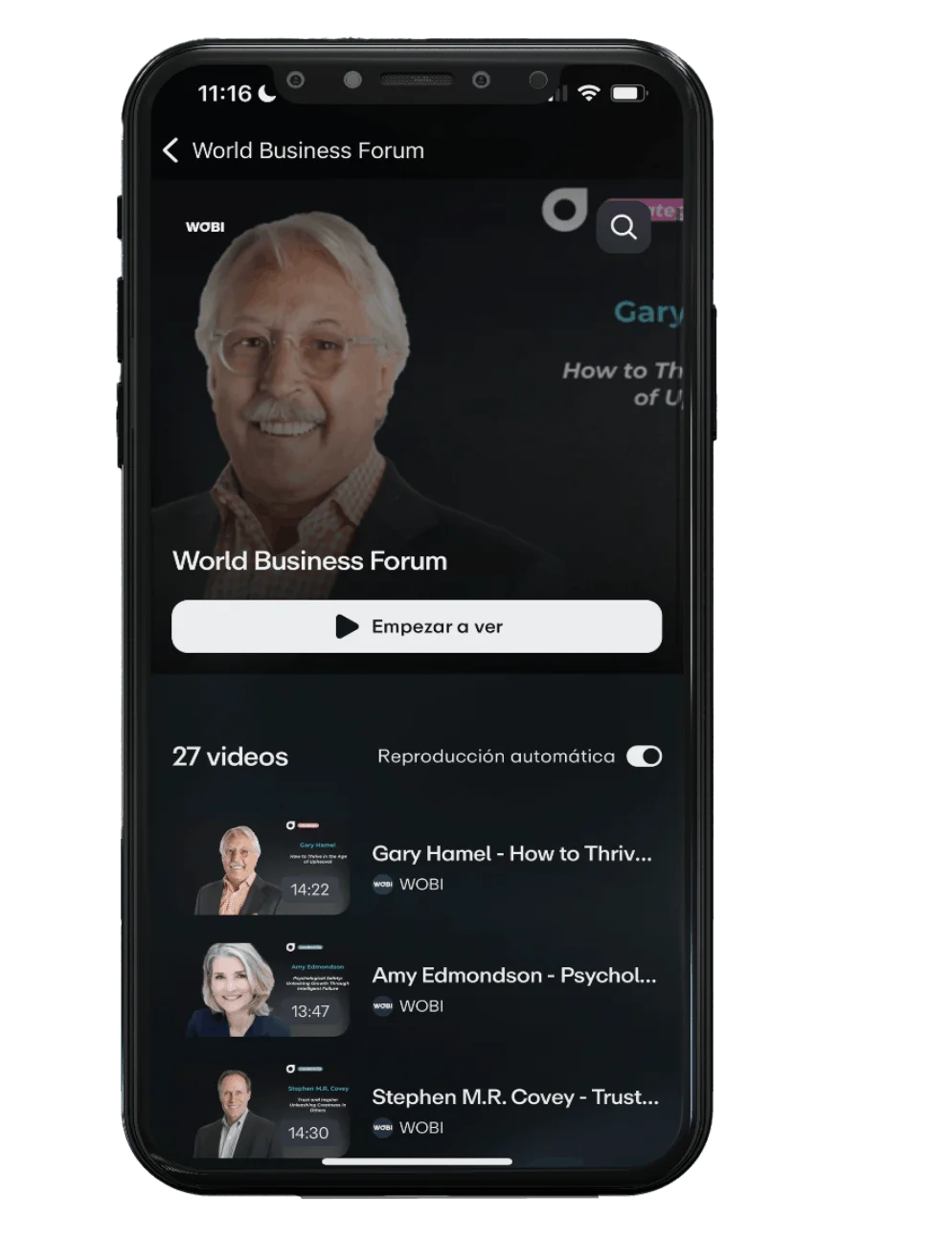
A World Business Forum is the gateway to a year-round experience. But that’s just the start. Attending the forum, opens the door to on-demand recordings of every World Business Forum held globally, masterclasses, courses, podcasts, articles, and book summaries available throughout the year; exclusive in-person events with WOBI throughout the year; and entry into a global community of more than 10,000 senior executives. The forum is the catalyst. The 365 days that follow are where two days of ideas become learning, connection, and application that compounds. That distinction matters because most of the executives who attend WOBI do not come alone — they come because their organizations are facing the same saturation, the same pressure to transcend it, and the same need to develop a generation of leaders inside the company who can think clearly under load. Every session has to earn its place not just in an executive’s calendar, but in the trajectory of the organization they lead.
In an era when content is cheap, attention is the only finite resource. The leaders — and the companies — that learn to spend it well, that learn what to ignore and what to honor with their time, will define the next decade of business. The rest will be busy.
To Eliot’s question — where is the wisdom we have lost in knowledge? — there is, today, a simple answer: it has not been lost. It has been buried. The work, for executives and for institutions like ours, is the same it has always been. We dig.
The World Business Forum 2026 will take place in:
- Bogotá — October 28–29 — wobi.co/es/wbf-bogota
- New York — November 4–5 — wbf.wobi.com/wbf/wbf-nyc
- Sydney — November 5–6 — wobi.au/wbf-sydney
- Mexico City — November 10–11 — wobi.com.mx/es/wbf-mexico
- Madrid — November 17–18 — wobi.es/es/wbf-madrid
- Milan — November 18–19 — wobitalia.it/it/wbf-milano
For more on WOBI and year-round programming, visit wobi.com.
________________________________________________________________________
About the author: Chiarella Bencan is Chief Content & Experiences Officer at WOBI. For more than 35 years, WOBI has curated the world’s most influential business thinkers — from academia, practice, the arts, politics, and the sciences — to help executives and their organizations thrive in eras of constant change.
Want to keep exploring these ideas? Discover all episodes of the WOBI Podcast – Case of Success and access over 300 hours of content from the world’s best thinkers through the WOBI Membership. Includes in-person access to a World Business Forum and exclusive networking opportunities.